
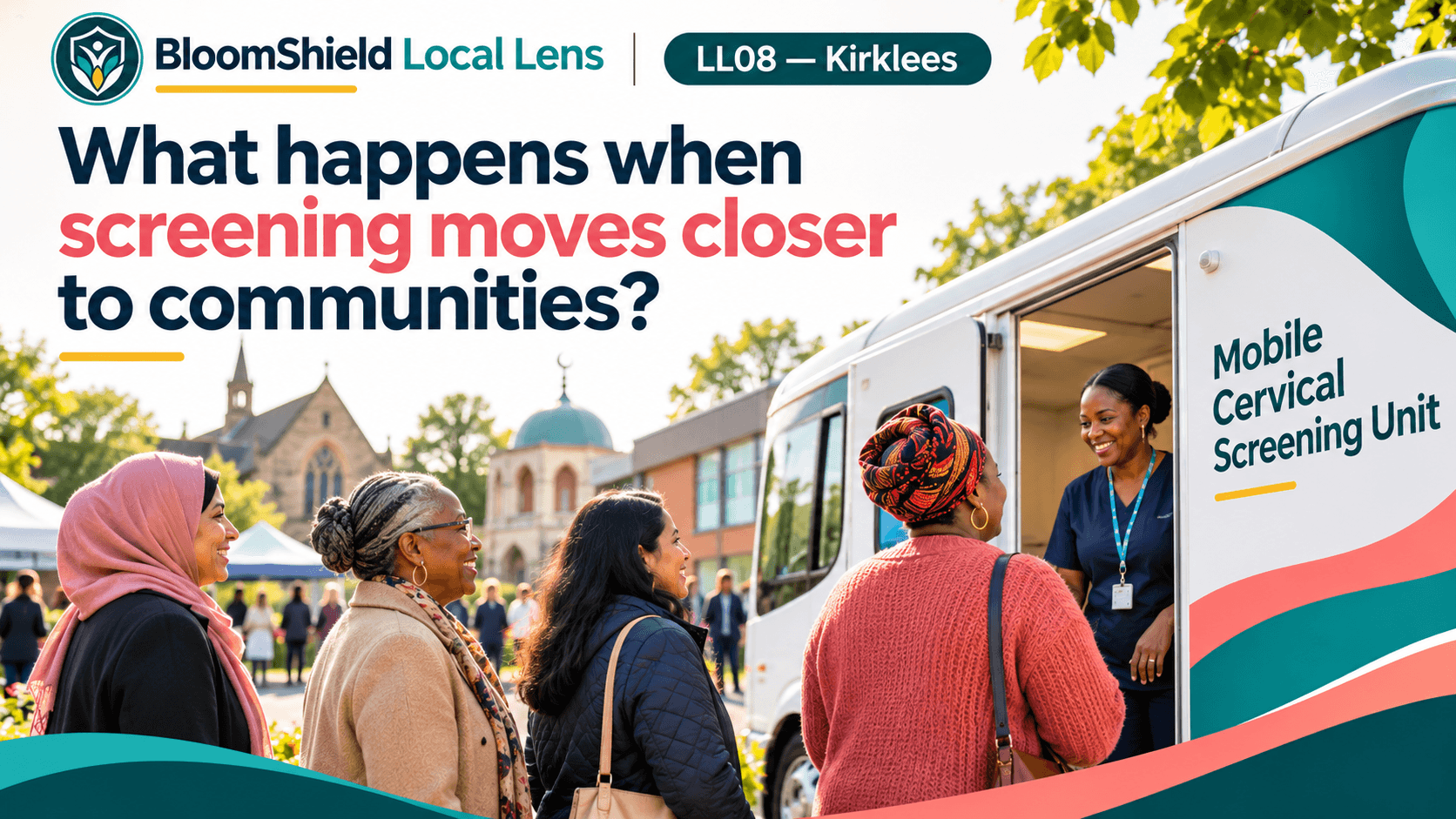
When Screening Moves Closer to Communities
What Kirklees’ mobile cervical screening approach tells us about accessibility, trust and adapting services around people.
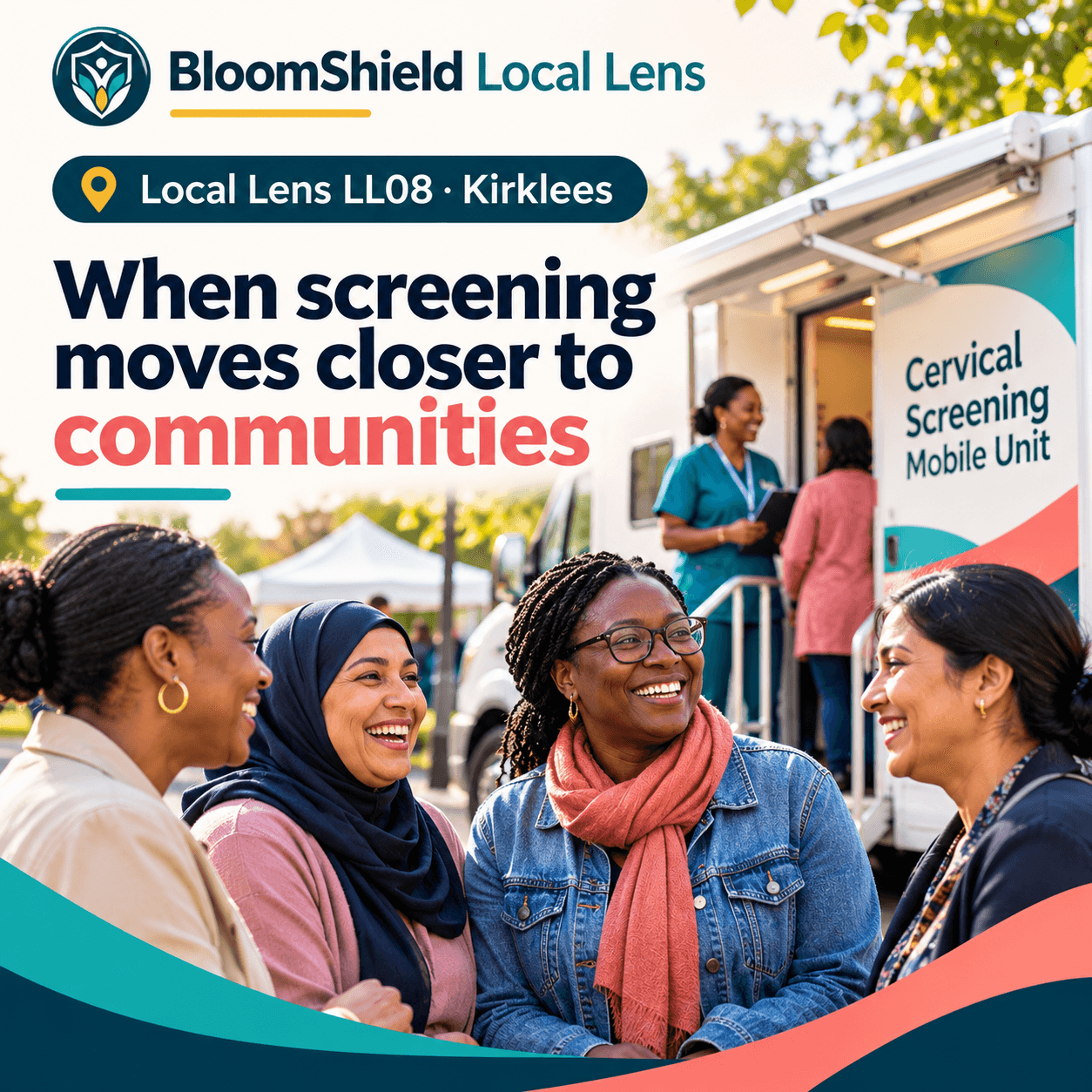
Kirklees brought cervical screening into community settings through a mobile drop-in service. BloomShield Local Lens examines what service adaptation can mean for access and participation.
By BloomShield CIC
4 min read
Published by BloomShield Insights
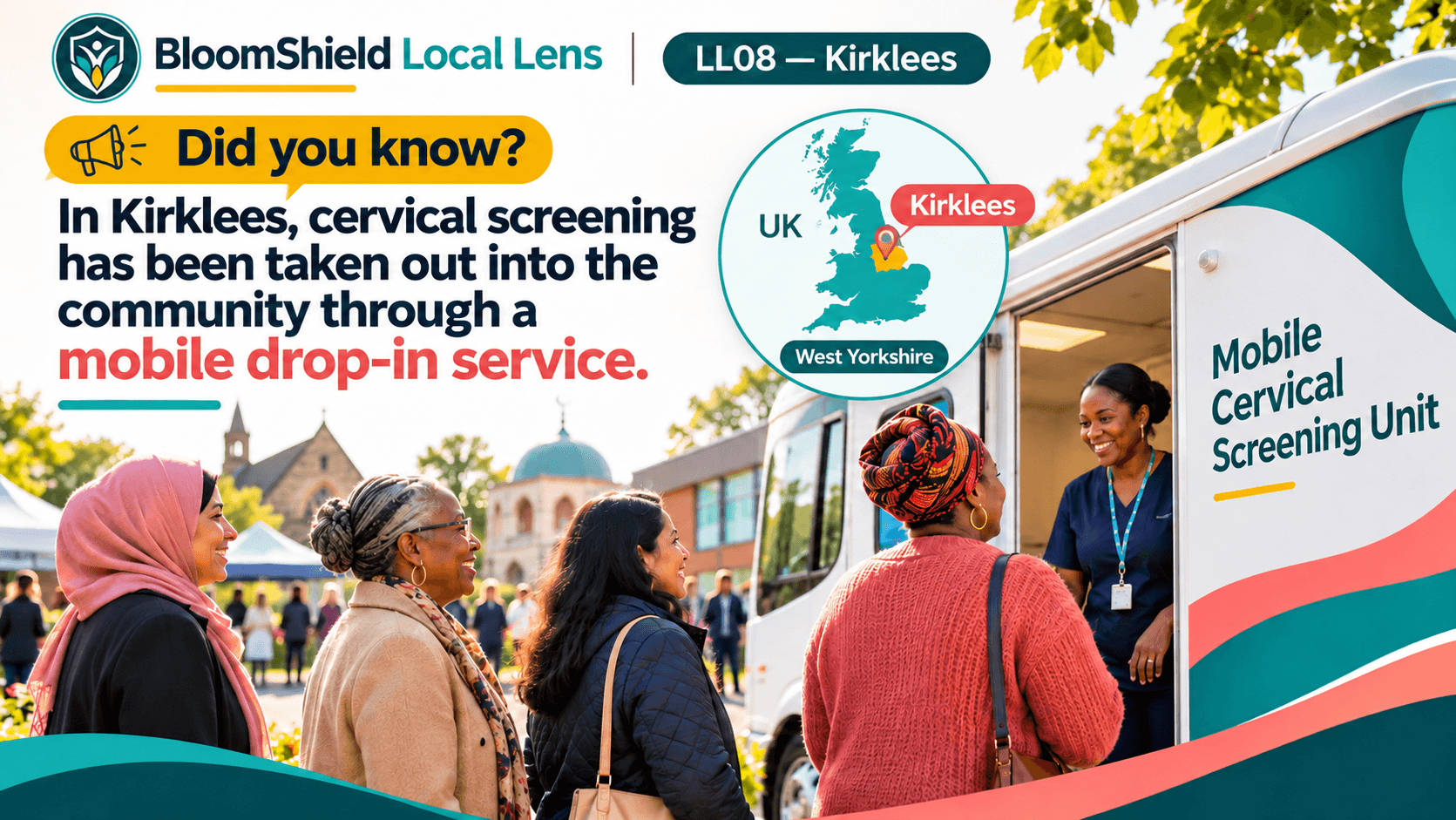
Kirklees is a metropolitan borough in West Yorkshire, centred on Huddersfield and Dewsbury.
In March 2026, Kirklees Council’s Public Health Team launched a mobile cervical screening unit with Locala. Funded by the West Yorkshire and Harrogate Cancer Alliance, it offered free drop-in screening at community locations.
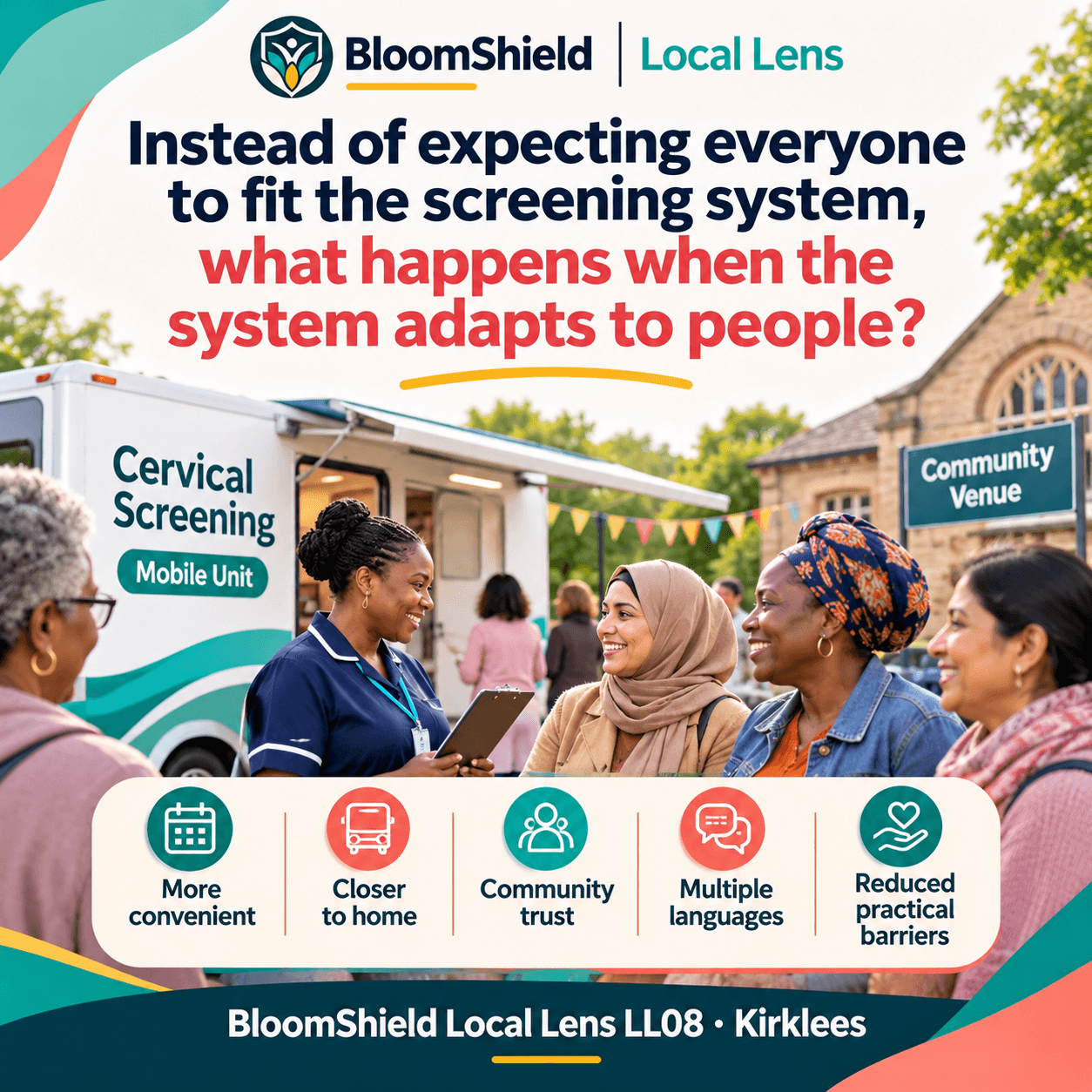
The idea is simple. Instead of expecting everyone to fit the screening system, bring screening closer to where people already are.
What Kirklees changed
The mobile unit visited Dewsbury Minster, Eddercliffe Health Centre, Clare Hill Community Centre, Al-Hikmah Centre in Batley, Ravensthorpe Community Centre, the Accu Football Stadium and other community venues in Huddersfield.
People could attend if they had received a cervical screening invitation, missed a previous appointment or were overdue. No appointment was required.
Clinical support was available in English, Urdu, Hindi and Bengali. People could also drop in to ask questions or discuss concerns before deciding whether to proceed.
That is more than a change of venue. It is a change in how access is designed.
Why community delivery matters
A screening programme can be clinically available and still be difficult to use. Appointments may clash with work or caring responsibilities. Travel may be inconvenient. Some people may feel anxious about attending their GP practice or be unsure what the test involves.
Before the pilot, Kirklees Council and community champions heard directly from residents about unsuitable appointment times, anxiety about the test and the need for language support. Those conversations helped shape the mobile service.
Availability ≠ accessibility ≠ participation.
Making screening available is the first step. Designing it around the realities of people’s lives is another.
What barriers might this reduce?
A mobile drop-in service can shorten journeys and remove the need to book ahead. Familiar community settings can make the service more visible, while language support can make it easier to ask questions and understand what to expect.
There may also be a trust dimension. Being able to talk to a clinician in a recognised community venue before deciding whether to proceed can feel very different from receiving a letter and arranging an appointment independently.
What we still need to know
Early reports describe attendance by some people who had missed previous appointments, as well as some who were screened for the first time. Participants cited convenience and reassurance. The published case study gives examples of who came, but it does not quantify how much the pilot changed screening uptake across Kirklees or how many people completed follow-up.
How many people who had repeatedly missed screening took part? Which locations reached people who were overdue? Did language support influence participation? Were some groups still under-represented? And did people who needed follow-up complete the next stages of the pathway?
Answering those questions would help distinguish a well-received service from one that measurably narrows gaps in participation and follow-up.
What this means for pathway design
Kirklees offers an example of service adaptation. It changes where and how people can access screening. That principle matters beyond cervical screening. When participation is lower in a community, another awareness campaign may do little about the practical barriers people face.
What part of the pathway is creating friction, and can we redesign it?
That might mean changing where screening is delivered or when it is available. It might mean removing booking requirements, improving language support, involving trusted community organisations or helping people move from screening into follow-up care.
The question is not simply whether screening exists. It is whether people can realistically reach it, understand it, trust it and complete the pathway.
Local data. Local voices. Local action.
How did this insight land with you?
References and source links
- North Road Suite NHS — Mobile cervical screening unit in Kirklees10 March 2026. Eligibility, community locations and language support.
- Kirklees Council — Mobile cervical screening pilot sees strong community response27 April 2026. Early participant feedback and evaluation plans.
- Local Government Association — Community clinical van outreach case study10 June 2026. Resident feedback, pilot delivery and early findings.
Contributor
About the author
BloomShield CIC
BloomShield CIC connects evidence, communities and implementation to advance equitable cancer prevention and earlier diagnosis.
Corrections, evidence or partnership follow-up
Suggest a correction, share relevant evidence or explore a partnership.
Cancer Care Partnership Ecosystem
CCPE Lens
This Insight is indexed through the domains most relevant to implementation and equitable impact.
Cross-cutting domains
- People
- Partnerships
- Systems
- Equity
- Impact